
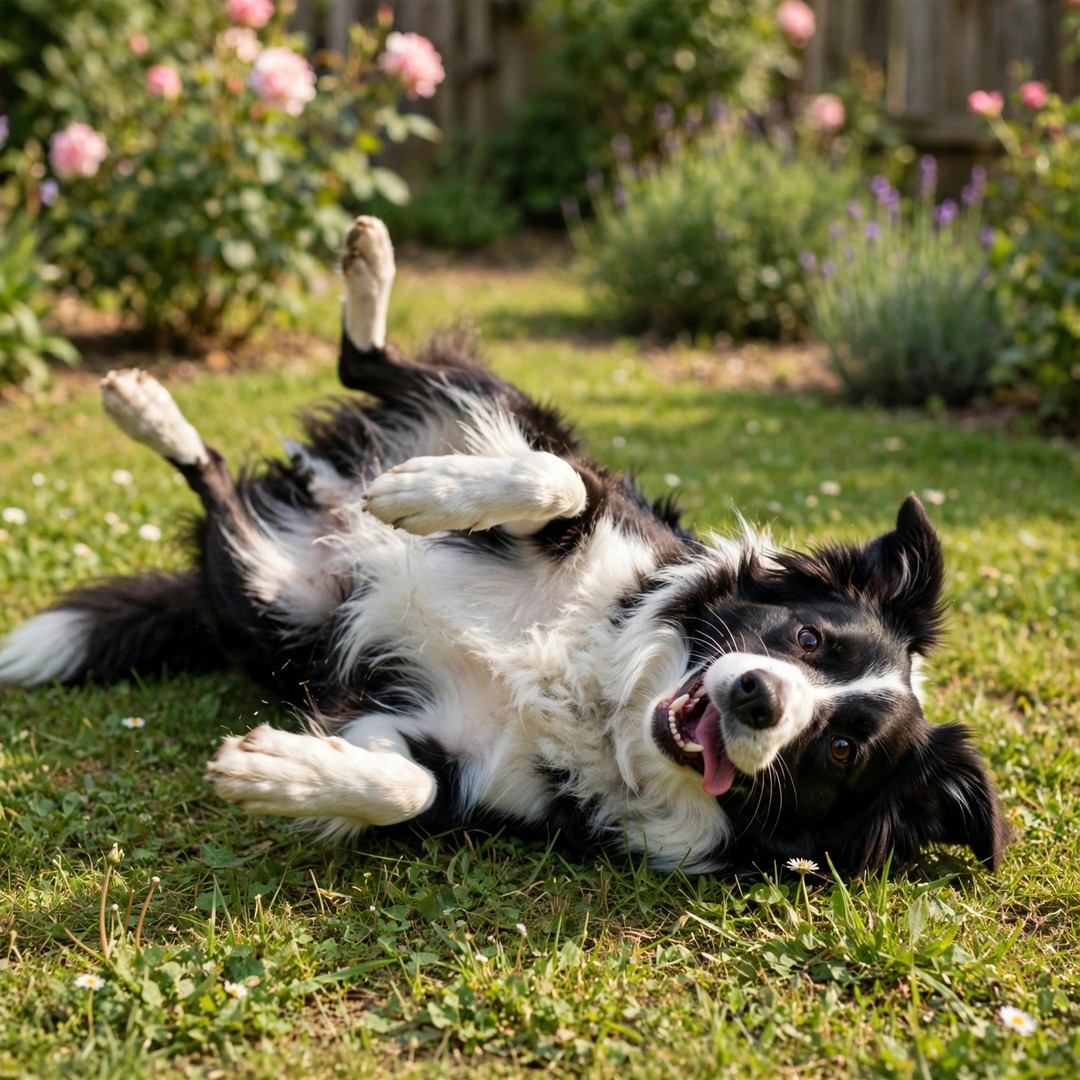
Roll over is the trick that makes everyone smile. Your dog flops onto their side, rolls in a neat circle, and pops back up looking enormously pleased with themselves. It looks impressive, but it is really just a chain of small steps — and most dogs can learn it in a week or two of short, happy sessions.
Why this matters
Roll over is more than a party trick. It builds trust, because your dog has to show you their belly and trust that you will not grab at them. It is good exercise for their core and flexibility, and it is a wonderful confidence booster for a shy dog. Best of all, it is fun — for both of you.
Before you start
Your dog should already know “down” — lying flat on the floor — because roll over starts from there. If your dog does not lie down on cue yet, teach that first. You will also need:
- Small, soft treats your dog loves, cut into pea-sized pieces
- A non-slip surface — carpet, a rug, or grass. A slippery floor makes rolling scary and hard
- Five minutes — that is all a training session needs to be
Choose a time when your dog is relaxed but not sleepy, and work in a quiet room without other dogs or distractions.
Step 1: The lure to the side (day 1–2)
Ask your dog to lie down. Hold a treat close to their nose, then move it slowly towards their shoulder — the same side every time, so your dog always rolls the same way. Most dogs will turn their head to follow the treat, then flop onto their side. The moment their shoulder touches the floor, say “yes!” and give them the treat.
Repeat this a few times, then stop. Three to five repetitions per session is plenty. If your dog stands up instead of flopping, you moved the treat too far or too fast. Slow down, keep the treat closer to their nose, and try again.
Step 2: The full roll (day 3–5)
Once your dog flops onto their side happily, keep moving the treat in the same arc — from their nose, over their shoulder, and around towards their back. Your dog should follow the treat and roll onto their back, then all the way over to their other side. The moment they complete the roll, say “yes!” and give them a treat.
Do not worry if the first rolls are clumsy. Some dogs roll slowly and carefully; others fling themselves over with enormous enthusiasm. Both are fine. What matters is that your dog is relaxed and enjoying it. If they seem worried or stiff, go back to step 1 for another day.
Step 3: Add the words (day 5–7)
When your dog is rolling smoothly with the lure, start adding the cue. Just before you move the treat, say “roll over” in a cheerful voice. After a few sessions, try saying the words first and moving your hand a little less. Your dog will start to connect the words with the movement.
Once they roll on the words alone, fade the treat lure: use an empty hand to guide them, then just the words. Keep rewarding with a treat every time — the reward is what keeps the trick alive.
Step 4: Practice and polish
Practise a few times a week, always in short sessions. Roll over on different surfaces — grass, a rug, a mat — so your dog generalises the trick. And add a little celebration: most dogs love a happy voice and a scratch after a good roll.
Keep sessions fun. If your dog walks away, they are done for the day. End on a success — even a small one — and come back tomorrow.
Troubleshooting common problems
My dog will not lie on their side. Some dogs are nervous about showing their belly. Spend a few days just rewarding them for lying down and turning their head to the side. Never push them over or roll them yourself — that breaks trust fast.
My dog rolls but gets up halfway. You may be rewarding too early. Wait until the full roll is complete before saying “yes” and treating.
My dog rolls the wrong way. Pick one direction and stick with it. If your dog rolls to the left, always lure to the left. Mixing directions confuses them.
My dog only rolls when they see a treat. That is normal at first. Fade the lure gradually: hold the treat in your other hand, then in your pocket, then reward after the roll from your pocket. The trick stays, the treat habit fades.
When not to teach roll over
Roll over is not for every dog. Skip it — or ask your vet first — if your dog is very old, overweight, has arthritis or joint pain, has recently had surgery, or has a back or spine problem. Rolling puts pressure on the spine and joints, and a dog in pain should not be asked to do it. There are plenty of other tricks — shake, spin, or touch — that suit a stiff or senior dog better.
A trick worth teaching
Roll over takes patience, a handful of treats, and a dog who trusts you enough to show their belly. Teach it slowly, keep it fun, and you will have a trick that delights everyone who sees it — including your dog.
Has your dog learned to roll over? How long did it take, and what finally made it click? Share your story in the comments — new trainers will thank you.
This article is for general information only and is not veterinary advice — consult a veterinarian or a certified professional trainer about your dog’s training and health.