
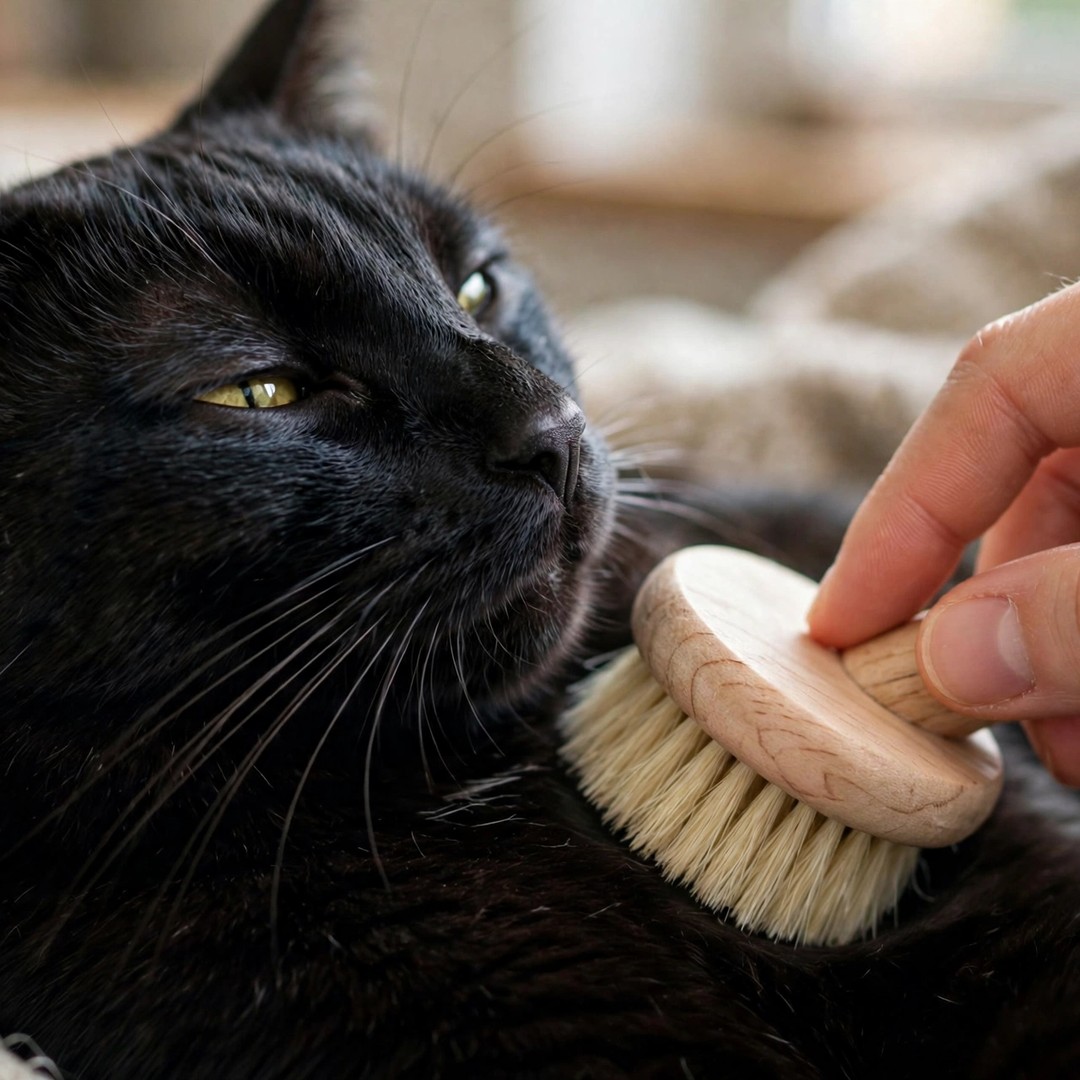
You are stroking your cat, and you notice it: tiny white flakes on her dark fur, like snow on a black coat. Or you pick up her favourite blanket and see a dusting of white specks where she has been lying. Your cat has dandruff — and you are wondering whether it is just dry skin, or something that needs a vet.
The honest answer is that dandruff in cats is common, and most of the time the cause is simple and easy to fix. But sometimes it is the first sign of a skin problem that needs attention. Here is how to tell the difference, and when to act.
Why This Matters
A cat’s skin is her largest organ, and it does a lot of work: it protects her from infection, it keeps her warm, and it is one of the first places a health problem shows up. Dandruff is the skin shedding faster than usual, and the flakes you see are a message — usually a small one, but worth reading.
Knowing what causes dandruff matters because the fix depends on the cause. Dry air needs one answer, a poor diet needs another, and a skin infection needs a vet. Treating the wrong cause wastes time, and the flakes keep coming back.
What Does Normal Look Like?
A healthy cat’s skin is smooth, pale pink, and free of flakes, and her coat is glossy and even. A few tiny flakes now and then, especially in winter when the heating is on, are normal — just as a little dry skin is normal for us in cold weather.
What is not normal: large flakes, or flakes that keep coming back no matter what you do; red, sore, or inflamed skin under the flakes; bald patches, or fur that is thinning; a cat that scratches, licks, or bites at the same spot over and over; or flakes that come with a smell, or with greasy, matted fur. Those are signs something needs a closer look.
Common Causes of Dandruff in Cats
Dry air and low humidity
This is the most common cause, especially in winter. Central heating dries out the air in the house, and your cat’s skin dries out with it. The flakes are usually small, dry, and spread evenly over the back and the base of the tail, and the skin underneath looks normal — not red, not sore. A humidifier in the room where your cat sleeps, or a bowl of water near a radiator, can help a lot.
Not grooming enough
Cats groom themselves, and grooming spreads the natural oils from the skin through the coat. A cat that cannot groom properly — an older cat with stiff joints, an overweight cat that cannot reach her back, or a cat that is unwell — will often develop dandruff, because the oils are not being spread and the dead skin is not being removed. Gentle brushing helps: it removes the loose flakes and spreads the oils, just as grooming does.
A poor diet
A cat’s coat is one of the first things to suffer when her diet is not right. A food that is low in essential fatty acids, especially omega-3 and omega-6, can leave the skin dry and flaky. If your cat’s coat has become dull as well as flaky, the food may be part of the problem. A complete, balanced food made for your cat’s age and health is the foundation — and if you want to add a supplement, ask your vet first, because the wrong supplement can do more harm than good.
Allergies
Cats can be allergic to pollen, dust mites, mould, and household cleaning products, and to ingredients in their food. An allergy often causes dandruff alongside other signs — itchy skin, overgrooming, red ears, or sneezing. If the dandruff comes with itching, an allergy is a real possibility, and your vet can help you work out what is triggering it.
Skin infections and parasites
A fungal infection such as ringworm, a bacterial infection, or parasites such as fleas and mites can all cause dandruff. The flakes in these cases are often larger, or greasy, or they come with hair loss, redness, or a smell. Ringworm is especially worth knowing about: it causes circular patches of hair loss with flaky skin, and it can spread to people, so it needs a vet promptly.
An underlying health problem
Sometimes dandruff is a sign of something going on inside the body — diabetes, thyroid problems, or kidney disease can all affect the skin and coat. This is more common in older cats, and it usually comes with other signs: drinking more water, eating more or less than usual, losing weight, or becoming lethargic. If your cat has dandruff and any of those signs, a vet visit is the right next step.
What to Check at Home
If you notice dandruff, take a calm look at the whole picture:
- Where are the flakes? Evenly spread over the back usually points to dry air or diet. In one spot only usually points to something local — an infection, a bite, or an injury.
- What does the skin look like? Pale pink and calm is usually mild. Red, sore, or inflamed skin needs a vet.
- Is she itchy? A cat that scratches, licks, or bites at her skin is uncomfortable, and that needs attention.
- Has anything changed? A new food, a new cleaning product, the heating coming on, or a change in the house can all affect a cat’s skin.
- Can she groom herself? An older or overweight cat that cannot reach her back will need your help with brushing.
- Any other changes? Drinking more, eating differently, losing weight, or becoming lethargic alongside dandruff are all reasons to call the vet sooner.
What You Can Do at Home
- Brush her gently, a few times a week. A soft brush removes loose flakes, spreads the skin’s natural oils, and helps the coat stay healthy. It is also a good way to check her skin regularly. Be gentle — a cat with sore skin will not thank you for a hard brush.
- Keep the air moist. A humidifier in the room where your cat sleeps can make a real difference in winter, and it helps your skin too.
- Feed a complete, balanced food. Do not switch foods suddenly, and do not add supplements without asking your vet. A good food, fed consistently, is the best foundation for healthy skin.
- Keep her environment calm. Stress can make skin problems worse, just as it can upset a cat’s stomach. A quiet, safe place to rest helps.
- Check for fleas. Run a fine-toothed flea comb through her coat, and look for tiny black specks — flea dirt. If you find fleas, treat her with a vet-approved flea product, and treat the house too.
What Not to Do
Never use human dandruff shampoo on your cat. Human shampoos are made for human skin, and many contain ingredients that are harmful to cats — and a cat will lick whatever is on her coat, so anything you put on her skin ends up inside her. If your cat needs a bath, use a shampoo made for cats, and only if your vet recommends it. Most cats never need a bath at all.
Do not try to treat a skin infection yourself, and do not put oils, creams, or home remedies on your cat’s skin without asking your vet. Many of the things that help human skin are toxic to cats, and a cat that licks a cream off her fur can become very ill.
When to Call the Vet
Book a vet visit promptly if the dandruff comes with any of these:
- Red, sore, or inflamed skin under the flakes
- Bald patches, or fur that is thinning or falling out
- Flakes that are large, greasy, or smell unpleasant
- Your cat scratching, licking, or biting at her skin a lot
- Dandruff that does not improve after a few weeks of brushing and a good diet
- Circular patches of hair loss, which can be ringworm
- Drinking more water, eating differently, losing weight, or becoming lethargic
- A kitten or a very old cat with dandruff — both need a vet’s look sooner
If your cat’s skin is broken, bleeding, or very sore, call your vet the same day. Skin problems are one of those things where waiting can make a real difference to how quickly they heal.
The Bottom Line
Why does my cat have dandruff? Most often it is dry air, a cat that cannot groom properly, or a diet that is not quite right — and a little brushing, a humidifier, and a good food will sort it out. But dandruff with red skin, hair loss, heavy itching, or other changes in your cat is a different story, and it needs a vet. What matters is not ignoring the flakes: they are your cat’s skin telling you something, and listening early makes everything easier.
Has your cat ever had dandruff? What caused it, and what helped? Tell us in the comments — it might reassure another cat owner who is wondering the same thing right now.
This article is for general information only and is not veterinary advice. If you are worried about your cat’s skin or health, please consult a veterinarian.