
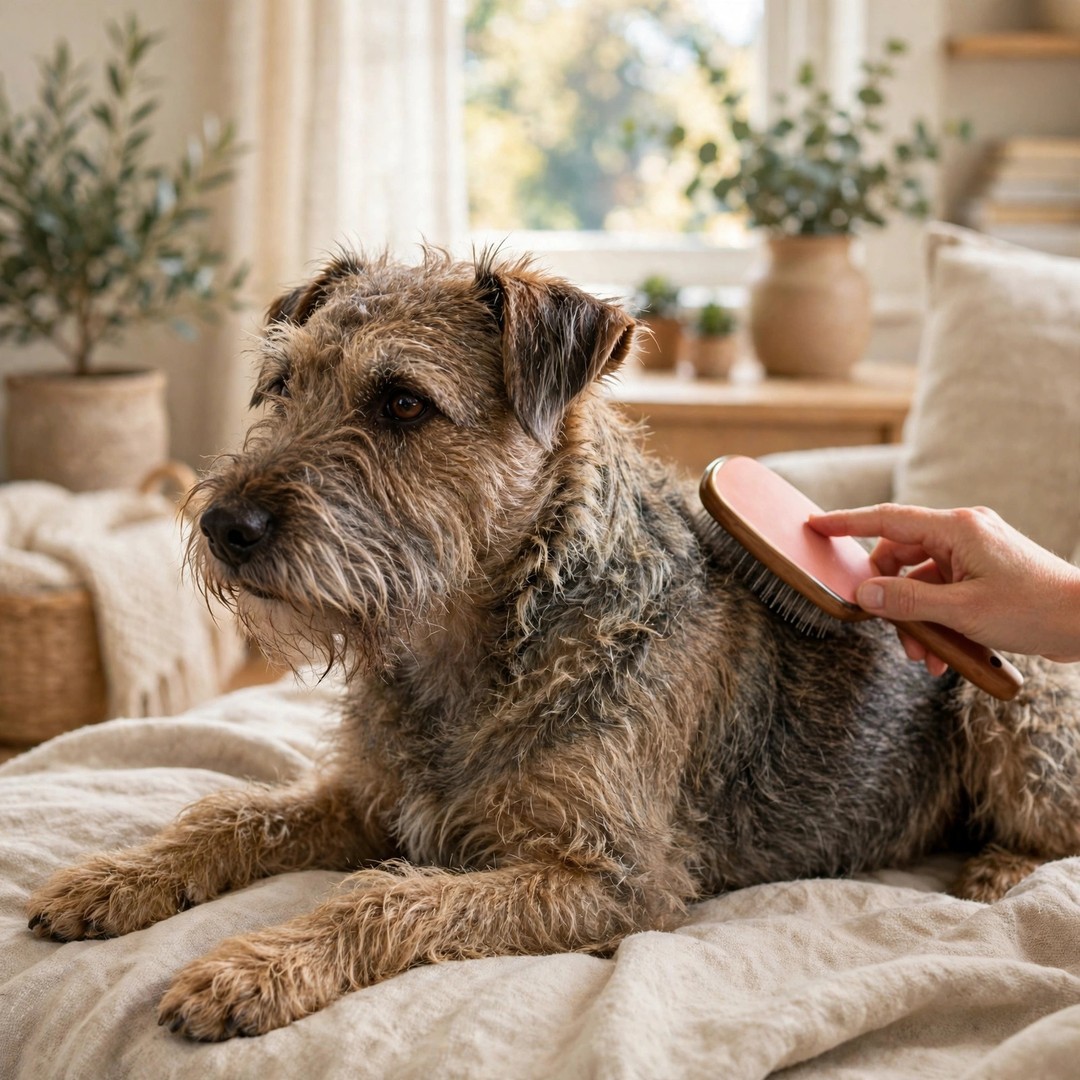
Your dog’s coat feels rough and springy under your hand, almost like a bristly doormat, and when you run a normal brush through it, the brush seems to skate over the top without doing much at all. That is a wire coat, and it behaves very differently from a soft or silky coat. Wire-coated breeds — terriers like the Airedale, the Wire Fox Terrier, and the Schnauzer, and many scruffy mixed breeds — grow a harsh, wiry topcoat over a softer undercoat. The coat is designed to repel dirt and water, but it also tangles, traps dead hair, and mats in the places you least expect. Choosing the best dog brush for wire-coated dogs is about finding tools that reach through that tough outer layer without scratching the skin underneath.
Why This Matters
A wire coat that is never brushed properly does not just look untidy. The wiry topcoat sheds its dead hairs slowly, and if those hairs are not brushed out, they tangle with the softer undercoat and form mats, especially behind the ears, under the collar, in the armpits, and around the legs. Mats pull on the skin, trap moisture, and can hide sores and hot spots. Regular brushing also keeps the coat doing its job: a healthy wire coat sheds water and dirt, while a neglected one goes soft, dull, and patchy. And brushing gives you a regular chance to spot lumps, ticks, or sore patches early, while they are still small problems. The right brush, used a few times a week, keeps the coat crisp, the skin healthy, and your dog comfortable.
What Makes a Wire Coat Different
A wire coat has two layers that behave very differently. The topcoat is made of harsh, wiry guard hairs that stand up from the skin and feel rough to the touch. Underneath sits a softer, denser undercoat that insulates your dog. The wiry topcoat does not shed the way a soft coat does — the dead hairs stay caught in the coat instead of falling out — which is why wire-coated dogs often seem to shed less, even though their coats need just as much care. A brush for a wire-coated dog needs to grip those stiff hairs and pull the dead ones out, reach the undercoat without scraping the skin, and smooth the topcoat back into shape. A soft bristle brush alone will slide over the top and do almost nothing, while a harsh metal tool can scratch thin skin and break the wiry hairs.
The Main Brush Types
Slicker Brush
A slicker brush with fine, flexible wire pins is the main tool for a wire coat. The pins reach through the wiry topcoat into the undercoat, remove loose hair, and work out light tangles before they become mats. Choose one with a medium or large head and pins that flex, not stiff ones — stiff pins scratch the skin and snap the wiry hairs. Use it with a light touch, in short strokes in the direction the hair grows, and never press it flat against the skin.
Pin Brush
A pin brush with widely spaced metal pins and rounded tips on a cushioned base is the gentler everyday tool for a wire coat. It lifts dead hair from the topcoat and smooths the wiry hairs without pulling, and many dogs who flinch at a slicker will happily accept a pin brush. It may not reach the deepest undercoat on its own, but it is perfect for a daily once-over and for finishing after the slicker.
Bristle Brush
A firm bristle brush, with stiff natural or nylon bristles, is the finishing brush for a wire coat. It removes surface dust, spreads the coat’s natural oils, and smooths the wiry topcoat so it lies neatly. On its own it is not enough for a wire coat, but as the last step after the slicker and pin brush it makes a visible difference, and it leaves the coat looking crisp rather than fluffy.
Wide-Tooth Metal Comb
A wide-tooth metal comb is the best way to check your work. After brushing, run the comb gently through a section of coat: if it glides through, the coat is tangle-free; if it catches, there is a knot to work on. A comb is also the safest tool for delicate areas — behind the ears, around the face, between the toes, and under the collar, where tangles love to hide.
Stripping Comb
A stripping comb, or a stripping knife, is a specialist tool for wire coats. It grips the dead wiry hairs and pulls them out by the root, which is how a wire coat is kept crisp and harsh in texture. Hand stripping is a skill, and it takes practice to do it without hurting your dog, so if you want your dog’s coat stripped rather than clipped, ask a professional groomer to show you the technique first, or leave the stripping to them and use your slicker and pin brush for everyday care at home.
How to Choose the Right Brush
Start with your dog’s coat density. A thick, dense wire coat needs a slicker as the main tool, plus a pin brush for daily work and a comb to check your work. A lighter wire coat may need only a pin brush and a comb, with the slicker added during shedding season. Next, think about your dog’s skin: wire-coated dogs often have sensitive skin under that tough coat, so test any brush on yourself first — run it lightly over the inside of your wrist. If it feels scratchy to you, it will feel worse to your dog. Choose a handle that fits your hand comfortably, because a relaxed grip means a softer touch. The best dog brush for wire-coated dogs is the one that grips the wiry hairs, reaches the undercoat gently, and finishes with a crisp shine — not the most expensive tool on the shelf.
How to Brush a Wire-Coated Dog
Work in layers, always in the direction the fur grows. Start with the slicker in short, light strokes, lifting a small section of coat at a time so you reach the undercoat, not just the surface. Then use the pin brush to lift out the loosened dead hair and smooth the topcoat. Pay special attention to the tangle zones: behind the ears, under the collar, the belly, the backs of the legs, and the beard and eyebrows, where food and water collect. Then run the wide-tooth comb through each section to check for knots — if it catches, work the knot out gently with your fingers or the slicker, never by yanking. Most wire-coated dogs need brushing two or three times a week. Keep sessions to ten or fifteen minutes, talk calmly, and end with a treat and praise while your dog is still relaxed.
Mistakes to Avoid
Do not clip a wire coat if you want to keep its texture — clipping softens the wiry hairs over time and changes the coat’s colour and feel, which is why many wire-coated breeds are hand stripped instead. Do not press hard with a slicker, and never brush against the direction of the fur, which pulls and feels uncomfortable. Do not brush only the top layer: if the comb cannot glide through, the undercoat still needs work. Do not skip the beard and eyebrows — food, water, and dirt collect there and the hair mats fast. Do not brush a dry, dirty coat aggressively, because grit in the fur acts like sandpaper when a brush drags through it. And do not use a de-shedding blade on a wire coat every week — these tools cut the topcoat and can ruin the wiry texture.
When to Ask a Vet or Groomer
If you notice bald patches, redness, sores, flaky skin, or a smell that seems unusual, contact your vet — these can be signs of a skin problem that needs professional advice. If your dog’s coat has gone suddenly dull, thin, or patchy, your vet can check whether diet, stress, or a health problem is behind it. If you find a new lump while brushing, have it checked promptly. If a mat has tightened against the skin, ask a professional groomer to remove it — cutting a mat out yourself can easily nick the skin underneath. And if you want your dog’s wire coat hand stripped, a good groomer can do it properly and show you how to maintain it at home.
Choosing the best brush for your wire-coated dog comes down to this: a flexible slicker for the undercoat, a pin brush for daily work, a firm bristle brush to finish, and a comb to check your work. A few sessions a week keeps the coat crisp, the skin healthy, and the shedding under control.
What brush works best for your wire-coated dog — or are you still fighting the tangles behind the ears? Tell us about your dog’s coat and we will help you narrow it down.
This article is for general information only and is not veterinary advice. If you are worried about your dog’s health, please consult a veterinarian.