
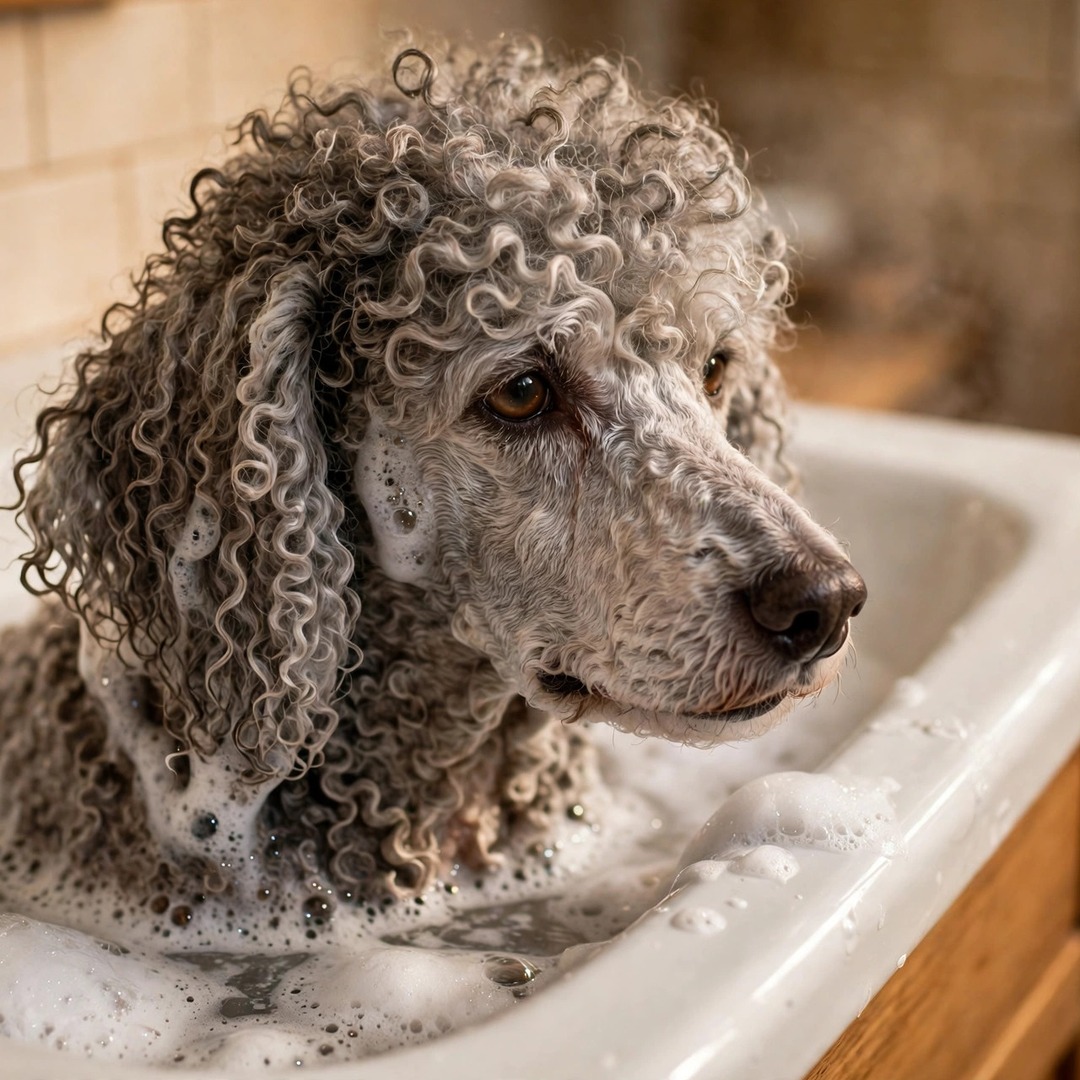
Your old curly-coated dog has just come in from the garden with mud in his curls, and you are standing in the bathroom holding a bottle of shampoo, wondering which one is still safe for a dog his age. A senior dog is not a young adult: his skin is thinner, it dries out faster, and it heals more slowly, while his curls are just as springy — and just as good at trapping dirt — as they ever were. Choosing the best dog shampoo for curly-coated senior dogs is about finding a formula gentle enough for ageing skin, yet right for those unusual springy curls.
Why This Matters
An older dog’s skin has changed. It produces less natural oil, it is thinner and more fragile, and it is more easily irritated by harsh detergents or strong fragrance. A shampoo that suited him at five can leave his skin dry, flaky, and itchy at twelve. On top of that, a curly coat has its own needs: the curls trap dirt and moisture close to the skin, they tangle easily, and a shampoo that strips the natural oils will leave them dry, frizzy, and full of knots. Senior dogs also feel the cold more, tire more easily, and may have stiff joints that make standing in a bath uncomfortable. Get the shampoo and the bath right, and bath time stays a calm, comfortable routine instead of a stressful chore for both of you.
What Makes a Curly-Coated Senior Dog Different
A senior dog’s coat is still curly, but it may be thinner, drier, or greyer than it once was, and the curls can lose some of their spring. The coat does not shed dirt the way a straight coat does: mud, leaves, and loose hair stay tangled in the curls, and the skin underneath gets less air. Older skin is also more prone to dry patches, flaking, and small lumps, so bath time is a good chance to notice changes early. A shampoo for a curly-coated senior dog should clean the coat and the skin, add gentle moisture, and rinse out completely without leaving a heavy residue. That usually means a mild, moisturising formula with no harsh detergents, no heavy silicones, and no strong fragrance — and a formula made for sensitive or senior skin.
What to Look for in a Shampoo
A Gentle, pH-Balanced Formula
This is the first rule. A dog’s skin is more alkaline than human skin, and a senior dog’s skin is more delicate still. Look for a shampoo made specifically for dogs, with a pH balanced for canine skin, and labelled gentle, sensitive, or senior. A gentle, soap-free or low-lather formula is usually best for a curly coat, because it cleans without stripping the natural oils that keep the curls soft. Never use a human shampoo on your dog — it is the wrong pH and can irritate ageing skin.
Moisturising Ingredients
Curly hair needs moisture, and older skin needs it even more. Look for a shampoo with gentle moisturising ingredients such as oatmeal, aloe vera, or shea butter. These soothe the skin and help the curls stay soft and bouncy instead of dry and frizzy. Avoid shampoos that promise a “squeaky clean” finish — that squeak usually means every trace of oil has been stripped away, which is the last thing a curly coat or an older dog’s skin needs.
A Light Conditioner — But Not a Heavy One
A light, rinse-out conditioner made for dogs can help curly coats stay tangle-free, but a heavy conditioner or a 2-in-1 shampoo and conditioner can coat the curls in a thick film, weigh them down, and make the coat look flat and greasy. For most senior dogs, a plain gentle shampoo plus a light detangling spray after the bath is the better choice — and it means less time standing in the bath.
No Strong Fragrance or Dyes
A strong perfume in a shampoo is for the owner, not the dog. Older dogs have a far stronger sense of smell than we do, and a heavily scented shampoo can be overwhelming and stressful for them. Dyes and artificial colours add nothing and can irritate sensitive skin. Choose a shampoo with little or no fragrance, and no added colour.
No Medicated Shampoo Unless Your Vet Says So
It is tempting to reach for a medicated shampoo when an older dog’s skin looks dry or flaky, but medicated formulas can be harsh, and they are made for specific problems. Do not use one unless your vet has told you to. If your dog’s skin has changed, ask your vet first — the cause may be diet, an allergy, or a health problem, and the wrong shampoo will not fix it.
How to Choose the Right Shampoo
Start with your dog’s skin. If his skin is healthy and he has no itching, a gentle, pH-balanced moisturising shampoo with oatmeal or aloe is a good everyday choice. If his curls are very dry or frizzy, look for a formula with shea butter or a light conditioning effect. If his coat tangles easily, a detangling shampoo — or a plain gentle shampoo plus a detangling spray — is the way to go. The best dog shampoo for curly-coated senior dogs is the one that leaves the curls clean, soft, and springy, with no residue and no frizz — and that your dog tolerates without a fuss. Buy a small bottle first, try it once, and watch for redness, itching, or a coat that goes limp or greasy after drying before you commit to a big bottle.
How to Bathe a Curly-Coated Senior Dog
Keep the bath short and comfortable. Brush your dog before the bath, not after: brushing first removes loose hair, dirt, and tangles, so the shampoo can reach the skin, and brushing a wet curly coat is far more likely to break the hair. Put a non-slip mat in the bath or shower so your dog feels steady — older dogs with stiff joints slip easily, and a fall can hurt. Use lukewarm water — never hot, never cold — and wet the coat thoroughly. Work a small amount of shampoo in with your fingertips, massaging gently down to the skin. Pay attention to the ears, the beard, and the legs, where dirt and tangles collect. Keep the shampoo away from the eyes and ears, and wash the face with a damp cloth instead. Rinse, rinse, and rinse again, until the water runs completely clear. Towel dry very gently — do not rub hard, because rubbing creates tangles — and keep your dog warm while he dries. Talk to him calmly throughout, and finish with a treat and praise so the bath ends on a good note. If standing is hard for him, let him lie on a mat while you wash him, or ask your groomer for help.
How Often Should You Bathe a Curly-Coated Senior Dog?
Less often than you think. Most curly-coated senior dogs only need a bath every four to six weeks, or when they are genuinely dirty or smelly. Between baths, a good brushing every few days keeps tangles and mats away, and a damp cloth can clean the beard and paws. Bathing too often strips the natural oils and dries the curls, which makes them frizzy and more likely to tangle — and an older dog’s skin dries out faster than a young dog’s. If your dog has rolled in something truly unpleasant, a bath is unavoidable, but for ordinary dirt, brushing is usually enough. If your dog has a skin problem, follow your vet’s advice on how often to bathe.
Mistakes to Avoid
Do not use human shampoo on your dog — it is the wrong pH and can irritate ageing skin. Do not use an adult medicated shampoo unless your vet has prescribed it. Do not use a heavy conditioner or a 2-in-1 shampoo and conditioner on a curly coat, because it will weigh the curls down and leave a greasy film. Do not skip the brushing before the bath: washing a tangled curly coat only makes the knots tighter. Do not rub the coat hard with a towel, and never use a hot hair dryer on a high setting. Do not skip the rinse: shampoo residue is the most common cause of itchy skin after a bath. Do not let your dog stand on a slippery surface, and do not rush — an older dog needs time, patience, and a warm room to dry in. And do not turn the bath into a wrestling match — if your dog gets upset, stop, calm him down, and try again another day, or ask your groomer or vet for help.
When to Ask a Vet or Groomer
If you notice bald patches, redness, sores, flaky skin, or a smell that seems unusual, contact your vet — these can be signs of a skin problem that needs professional advice. If your dog’s coat has gone suddenly dull, thin, or patchy, your vet can check whether diet, stress, or a health problem is behind it. If your dog is itching constantly despite a gentle shampoo, ask your vet whether an allergy or a skin condition is involved. If you find a new lump while bathing, have it checked promptly — older dogs are more likely to develop lumps, and most are harmless, but they should always be checked. If mats have tightened against the skin, ask a professional groomer to remove them — cutting a mat out yourself can easily nick the skin underneath. And if your dog finds standing in the bath painful, a good groomer can wash him on a raised table with support, and show you how to keep his coat comfortable at home.
Choosing the best shampoo for your curly-coated senior dog comes down to this: a gentle, tear-free shampoo with moisturising ingredients, no heavy conditioners, and no strong fragrance — plus a good brush before the bath, a non-slip mat, and a thorough rinse. A few calm baths, done well, keep the curls soft, the skin healthy, and your old friend happy to be washed.
What shampoo works best for your curly-coated senior dog — or is bath time still a slow, gentle adventure? Tell us what you use and we will help you narrow it down.
This article is for general information only and is not veterinary advice. If you are worried about your dog’s health, please consult a veterinarian.