
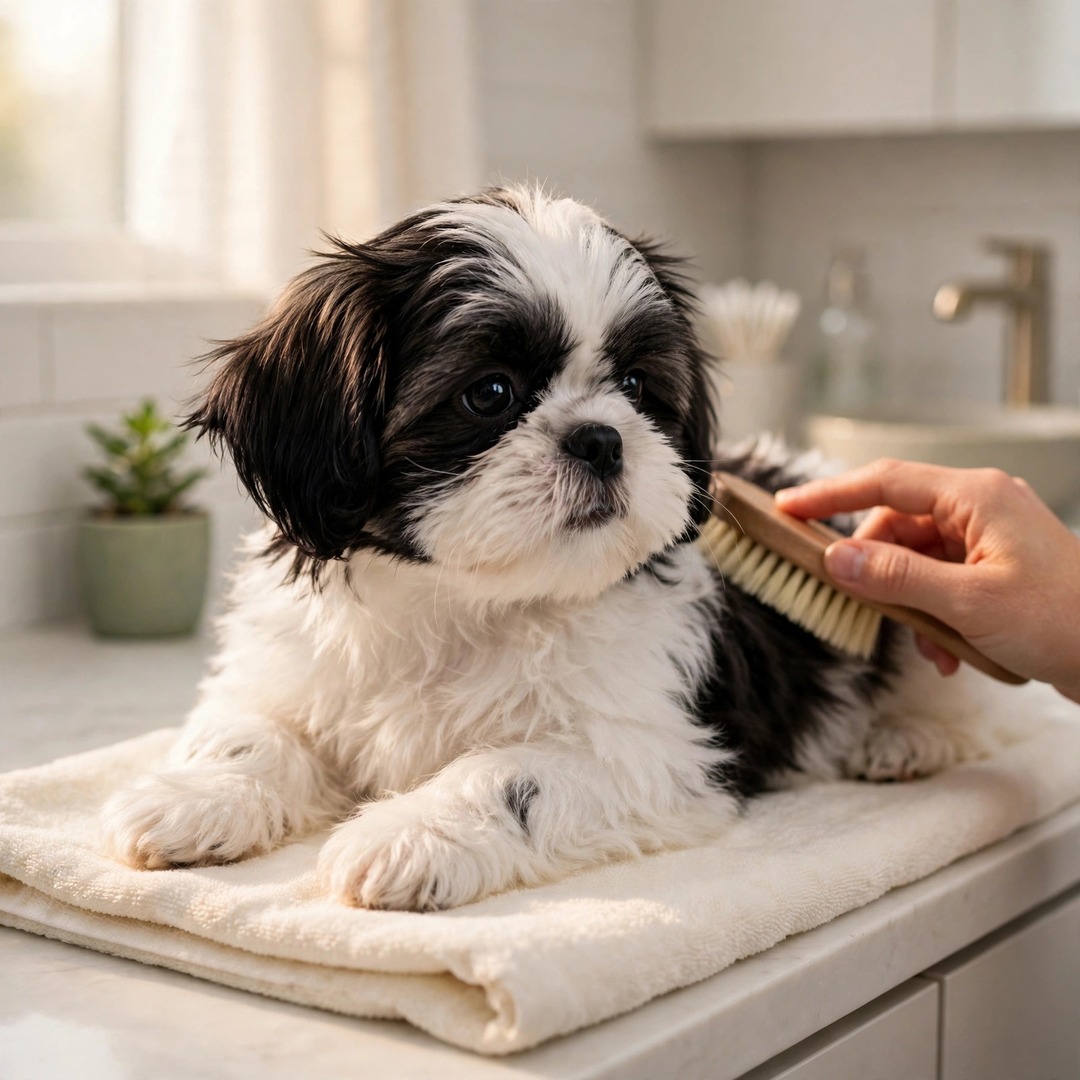
Your long-haired puppy comes trotting in from the garden with damp paws, a leaf stuck to one ear, and a knot already forming behind her shoulder — and she is only four months old. Her coat is still that soft, fluffy puppy fur, but the long adult hair is growing in underneath, and every bath from now on will shape how that coat behaves for years. The shampoo you pick matters far more for a long-haired puppy than for a short-coated one. A harsh formula can strip the natural oils that keep young hair soft, leaving it dry, brittle, and tangled within days. A shampoo that is too heavy can coat the fine puppy hair and make it greasy and limp. Choosing the best dog shampoo for long-haired puppies is about finding a formula that is gentle enough for young skin, cleans right down to the skin, rinses out completely, and leaves the coat smooth, soft, and easy to brush — without drying it out or weighing it down.
Why This Matters
A long coat is beautiful, but it is also a lot of work to keep clean, and that work starts in puppyhood. Long hair traps dirt, dust, pollen, and loose fur deep inside the coat, far from the surface where a quick wipe can reach it. When you wash a long-haired puppy, the shampoo has to travel through all that hair before it reaches the skin — and then it has to be rinsed out again through all that hair. If the shampoo does not rinse out fully, the residue left behind attracts dirt, makes the coat sticky, and turns small tangles into tight mats.
There is a second reason this choice matters so much for puppies. The first baths a puppy experiences teach her what bath time feels like for the rest of her life. A shampoo that stings her eyes or leaves her skin itchy can turn a puppy who loved the water into a dog who hides at the sound of running water. A gentle, pleasant bath with a mild shampoo builds a calm, cooperative bather — and a long-haired dog will need a bath far more often than a short-coated one, so that early trust pays off for years. The best dog shampoo for long-haired puppies is really a small investment in a coat that stays soft and shiny, and in a puppy who does not dread bath day.
What Makes a Long-Haired Puppy Different
Long-haired puppies — think Shih Tzus, Afghan hounds, spaniels, Maltese, and other breeds with flowing coats — have fine, soft puppy fur that is gradually replaced by longer adult hair. That puppy coat tangles at the slightest excuse: a collar rubbing the neck, a harness strap, a romp through the garden, or simply sleeping curled up in a ball. The fine hair catches on itself, and a tangle left for a few days can tighten into a mat that pulls on the skin.
Puppy skin is also more delicate than adult skin. It is thinner, more sensitive, and easier to dry out with a strong shampoo. A puppy’s coat is washed more often than an adult dog’s too, because puppies are gloriously messy — they fall in puddles, roll in grass, and step in everything. A shampoo for a long-haired puppy needs to be mild enough for frequent use, clean deeply enough to reach the skin through all that hair, and rinse out easily so nothing is left behind to irritate the skin or glue the coat together.
What to Look for in a Shampoo
A Gentle, Puppy-Safe Formula
This is the first rule. Look for a shampoo made for puppies, or at least one labelled gentle and pH-balanced for a dog’s skin. Puppy skin has a different pH from human skin, so never use a human shampoo — even a mild baby shampoo can dry a puppy’s skin and coat over time. A tear-free formula is a real bonus: if a little shampoo runs down your puppy’s face — and with a long coat, it will — it will not sting her eyes and ruin the whole experience.
Moisturising Ingredients
Long hair needs moisture to stay soft and tangle-free. Look for soothing, moisturising ingredients such as oatmeal, aloe vera, or shea butter, which help the coat hold moisture and stay smooth. Oatmeal is especially good, because it soothes young skin as well as softening the coat. Avoid shampoos with strong artificial fragrances, dyes, or heavy perfumes — a long coat holds scent for a long time, and a strong smell can irritate your puppy’s sensitive nose for days after the bath.
A Light, Detangling Feel
Some shampoos are made with a light conditioning effect that helps the hair slide past itself instead of catching. For a long-haired puppy, that is worth looking for. You do not need a heavy conditioner — a light, rinse-out conditioning shampoo, or a separate light detangling spray used after the bath, is usually enough. The goal is a coat that the brush glides through, not one that feels coated or greasy.
What to Avoid
Skip shampoos with harsh sulfates, strong medicated formulas, or flea and tick chemicals unless your vet has specifically recommended one. A medicated shampoo is a treatment, not a regular wash, and using one too often can dry out a puppy’s coat. Also avoid whitening shampoos for everyday use — they can be drying on fine puppy hair. And check the label for essential oils: some, such as tea tree oil, can be unsafe for puppies, so if a shampoo lists a long list of essential oils, ask your vet before using it.
How to Bathe a Long-Haired Puppy
A good shampoo only works if the bath itself is done well. Start by brushing your puppy gently before the bath, working through any tangles with your fingers or a wide-toothed comb. Water tightens knots, so bathing a tangled puppy makes the mats worse. Use lukewarm water — never hot — and wet the coat thoroughly, right down to the skin. Long hair can look wet on the surface while the skin underneath is still dry, so take your time.
Apply a small amount of shampoo and work it in gently with your fingertips, massaging down to the skin rather than scrubbing the hair in circles, which creates tangles. Pay attention to the areas that mat first: behind the ears, under the collar, in the armpits, and around the tail. Then rinse, rinse, and rinse again. With a long coat, rinsing takes longer than you expect. Run your fingers through the hair as the water flows and keep going until the water runs completely clear and the coat feels squeaky-clean rather than slippery.
Dry your puppy with a soft towel first, patting rather than rubbing, then use a dryer on its lowest, coolest setting if your puppy tolerates it. Hold the dryer at a distance and keep it moving. While the coat is still slightly damp, brush through it gently with a slicker brush or a wide-toothed comb, working in small sections from the ends of the hair toward the skin. This is the moment a good shampoo shows its value: the brush should glide through, not catch.
How Often Should You Bathe Her?
Most long-haired puppies do well with a bath every three to four weeks, or whenever they are genuinely dirty. Bathing more often than that is fine if you are using a truly gentle puppy shampoo, but daily or weekly baths with any formula will eventually dry out the skin. Between baths, a quick brush every day or two does more for the coat than extra washing. Brushing removes loose hair and dirt before they become tangles, and it spreads the natural oils through the coat. A five-minute brush after the evening walk is the single best habit you can build for a long-haired puppy.
Common Mistakes to Avoid
The most common mistake is using too much shampoo. A small amount, well diluted with water, cleans a puppy coat better than a big handful of neat shampoo, because it rinses out properly. The second mistake is skipping the pre-bath brush — bathing a tangled puppy locks the knots in place. The third is washing with water that is too hot, which dries the skin and makes the puppy hate the bath. And the fourth is forgetting to dry the coat fully: a long-haired puppy left damp can chill quickly, and damp hair pressed against the skin can develop a musty smell or irritate the skin underneath.
A Simple Way to Choose
If you are standing in the pet shop feeling overwhelmed, keep it simple. Pick a puppy-specific shampoo that is tear-free, lightly fragranced or fragrance-free, and contains a moisturising ingredient such as oatmeal or aloe. Try it for two or three baths and watch the coat: it should dry soft and smooth, brush out easily, and smell faintly clean rather than strongly perfumed. If the coat looks dull, feels sticky, or your puppy scratches more after bathing, try a different formula. Every puppy’s coat is slightly different, and the right shampoo is the one that leaves your puppy’s hair soft, her skin calm, and bath time easy.
What does your puppy’s coat feel like after her last bath — soft and smooth, or a little dry and tangled? Tell us in the comments, and share the shampoo that works best for your long-haired pup.
This article is for general information only and is not veterinary advice. If you are worried about your dog’s/cat’s health, please consult a veterinarian.