
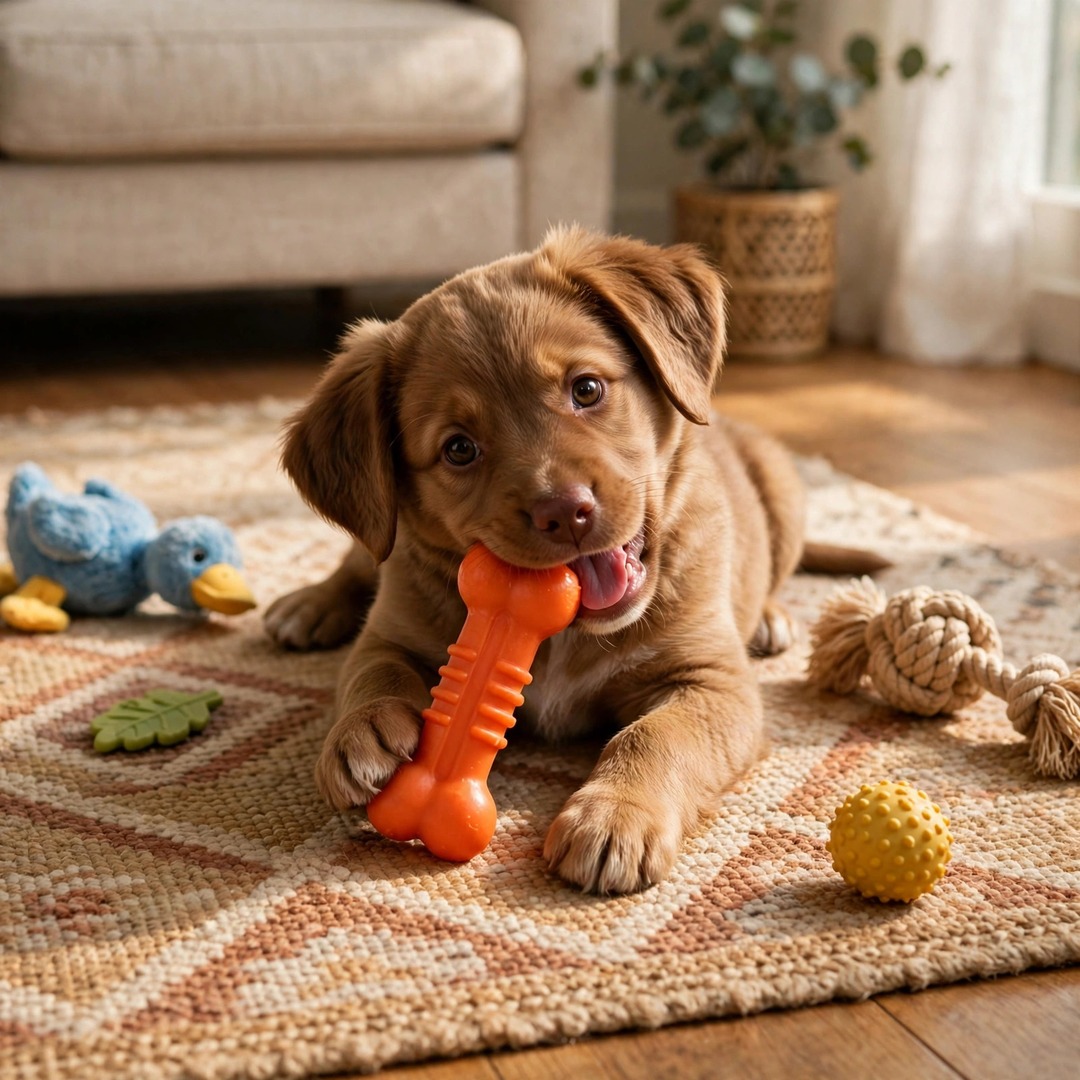
Your shoes. The table leg. The phone charger. The corner of the rug. If you have a puppy, you have probably discovered that everything in your house looks like a chew toy to them. It is frustrating, it is expensive, and it feels like it will never end.
Here is the reassuring part: chewing is completely normal puppy behaviour. Puppies explore the world with their mouths, and teething makes chewing feel good. Your puppy is not being naughty. They are being a puppy. The goal is not to stop chewing altogether — it is to teach them what they are allowed to chew.
Why This Matters
Chewing is how puppies learn about textures, relieve teething discomfort, and burn off energy. A puppy who never chews is a puppy who is not developing normally. The problem is not the chewing itself. The problem is what they choose to chew.
Left unmanaged, chewing can be dangerous. Puppies can swallow pieces of furniture, electrical cables, or household objects, which can cause choking or an intestinal blockage. Chewing electrical cords can cause serious burns or worse. Teaching your puppy what is safe to chew protects them as much as it protects your belongings.
The good news is that with a calm, consistent plan, most puppies learn the rules within a few weeks. You do not need harsh corrections or punishment. You need patience, good management, and plenty of things they are allowed to chew.
Step 1: Puppy-Proof Your Home
Start by removing temptation. This is the single most effective step, and it is the one most owners skip. Pick up shoes, bags, and clothes. Move phone chargers and cables out of reach or behind furniture. Put children’s toys away. Block access to rooms you cannot supervise.
Think like a puppy: get down on the floor and look around at their eye level. What is within reach? What dangles? What smells interesting? Anything at puppy height is fair game in their mind, so move it or protect it.
Use baby gates to keep your puppy in a safe, puppy-proofed room when you cannot watch them. A crate or playpen is also a good option for short periods. This is not punishment — it is management. Your puppy cannot chew the sofa if they cannot reach the sofa.
Step 2: Give Them Plenty of Legal Things to Chew
A puppy with nothing to chew will find something. Make sure they always have several safe options available. Puppy-safe chew toys, rubber toys designed for teething, and frozen carrots or a frozen wet washcloth can all help soothe sore gums. Rotate the toys every few days so they stay interesting — a toy that has been lying around for a week is boring, but the same toy after three days in the cupboard feels new again.
Choose chew toys that suit your puppy’s size and chewing strength. A toy that is too small is a choking risk. A toy that is too hard can damage puppy teeth. Look for toys labelled for puppies, and check them regularly for wear. Throw away any toy that is broken or has pieces coming off.
Frozen treats are especially helpful during teething. A Kong stuffed with puppy-safe food and frozen, or a clean washcloth soaked in water and frozen, gives your puppy something cold and soothing to gnaw on. Supervise them with any new chew until you know how they handle it.
Step 3: Redirect, Don’t Scold
When you catch your puppy chewing something they should not, stay calm. Do not shout, do not chase them, and do not yank the object out of their mouth — chasing turns it into a game, and grabbing can make them swallow what they are holding.
Instead, redirect. Trade the forbidden object for a chew toy. Hold the toy near their mouth, let them take it, and praise them warmly when they chew the toy instead. If they go back to the forbidden object, calmly remove them from the area or remove the object, and offer the toy again.
Praise is the key. Every time your puppy chews their own toy, tell them they are doing a great job. Puppies repeat behaviours that earn praise and treats. The more you reward chewing the right things, the less they will chew the wrong things.
If your puppy is chewing out of boredom, they may need more exercise and mental stimulation. A tired puppy is a calmer puppy. Short play sessions, gentle training, and puzzle feeders all help burn off the energy that would otherwise go into your furniture.
Step 4: Be Consistent
Everyone in the household needs to follow the same rules. If one person lets the puppy chew an old shoe, the puppy learns that shoes are chew toys — they cannot tell the difference between an old shoe and your new ones. Keep the rules simple and the same for everyone.
Consistency also means managing the environment every day, not just when you remember. Puppy-proofing is a daily habit until your puppy learns the rules. Most puppies improve significantly by six months of age, though some heavy chewers need management for longer.
What About Bitter Sprays?
Bitter apple sprays and similar deterrents can help with specific items, such as table legs or skirting boards. Spray the item, let it dry, and reapply regularly. They work for some puppies and not at all for others — some puppies actually seem to like the taste. A spray is a helper, not a solution. It works best alongside puppy-proofing and redirection, not instead of them.
When Chewing Is a Bigger Problem
Most puppy chewing is normal and improves with age and training. But if your puppy chews destructively even when they have plenty of toys, exercise, and attention, or if they swallow non-food items regularly, talk to your vet or a professional dog trainer. Excessive chewing can sometimes be linked to anxiety, boredom, or a nutritional issue, and a professional can help you work out what is going on.
Also watch for signs that your puppy has swallowed something they should not have: vomiting, loss of appetite, lethargy, or difficulty passing stool. If you suspect your puppy has swallowed a foreign object, call your vet promptly.
A Calm, Realistic Plan
Here is the whole plan in short: puppy-proof the house, provide plenty of safe chews, redirect calmly when they choose the wrong thing, praise them when they choose the right thing, and be patient. Your puppy is learning, and learning takes time.
Your shoes will survive. Your furniture will survive. And one day, your puppy will walk past a shoe without a second glance, and you will realise the plan worked.
What is the strangest thing your puppy has tried to chew? Every puppy owner has a story — share yours.
This article is for general information only and is not veterinary advice. If your puppy swallows a foreign object or shows signs of illness after chewing, consult a veterinarian.