
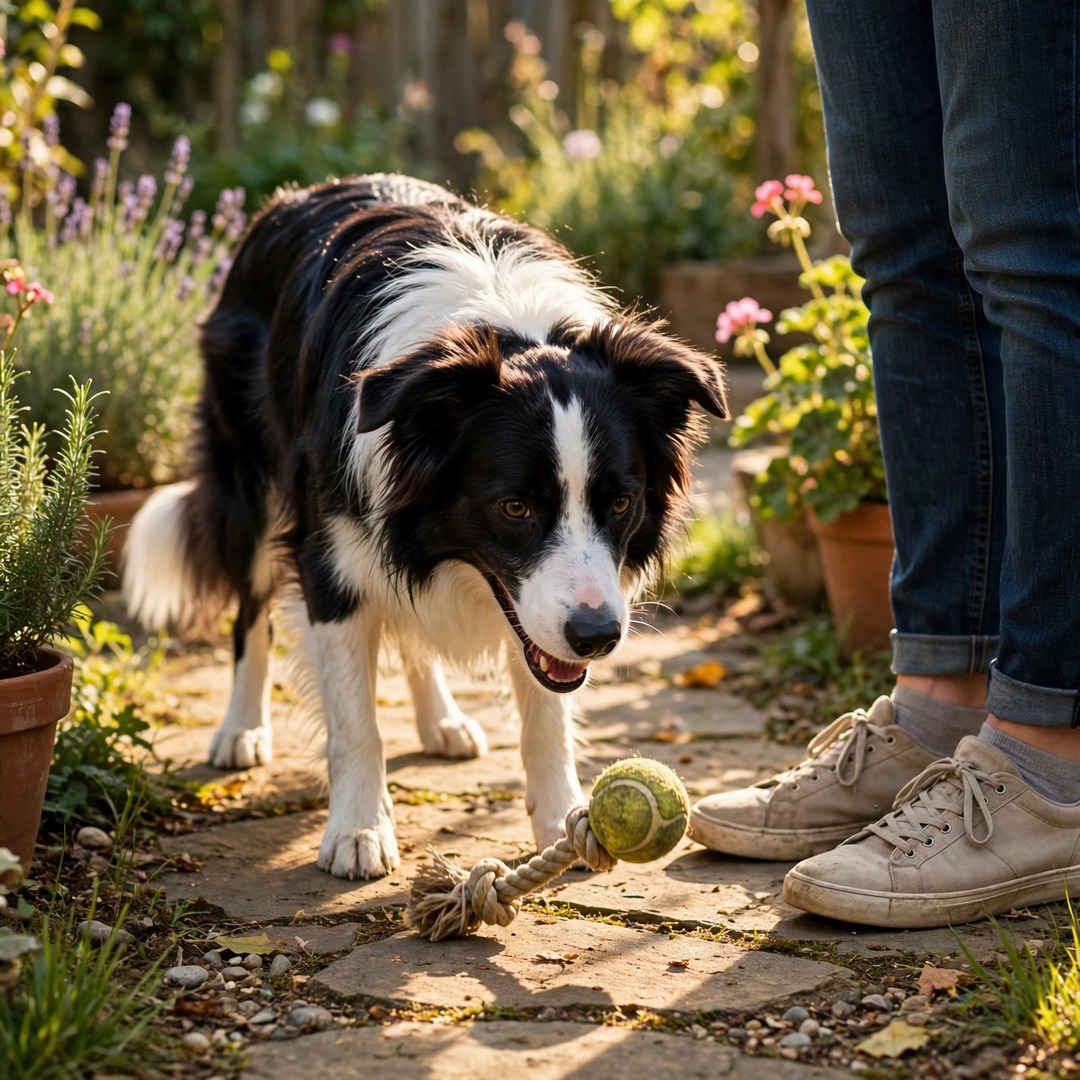
Your dog has found something — a sock, a shoe, a chicken bone on the pavement — and it is in their mouth. You reach for it. They turn away. You reach again. They swallow it. Or worse, they growl. Sound familiar?
“Drop it” is one of the most useful things you will ever teach your dog. It can stop them swallowing something dangerous, save your shoes, and turn a tense standoff into a happy trade. And it is surprisingly easy to teach, if you do it the right way.
Why This Matters
A dog who will drop something on your word is a safer dog. The world is full of things that can hurt a dog: cooked bones that splinter, chocolate dropped on the street, medication, socks and other objects that can cause a blockage. A dog who drops things willingly is a dog you can protect — even when you cannot reach them in time to take it away.
“Drop it” also protects your relationship with your dog. A dog who is chased, grabbed at, and pried open learns that hands mean losing good things — and they learn to swallow faster, run away, or guard what they have. A dog who has learned that dropping something earns something better will drop it happily, every time.
The Golden Rule: Always Trade, Never Grab
The single most important rule of teaching “drop it” is this: never take something from your dog without offering something better in return. If you grab a toy, a bone, or a sock out of your dog’s mouth, they learn that your hands mean losing good things — and they learn to swallow faster, run away, or guard what they have.
Instead, trade. Offer a high-value treat, let your dog drop what they are holding, and give them the treat. Your dog learns that letting go earns something better, not something worse. Over time, “drop it” becomes a happy word, not a threat.
This rule also means you should never use “drop it” to scold your dog. It is a cue, not a punishment. Keep it calm and friendly, every time.
Step 1: The Easy Trade
Start indoors, with your dog holding a toy they like but do not love — a rope toy, a rubber ball, something low-value. Hold a high-value treat near their nose — a small piece of chicken, cheese, or a smelly training treat. Most dogs will drop the toy to take the treat. The moment the toy leaves their mouth, say “yes” and give them the treat.
Then give the toy back. This is important. Your dog learns that dropping something does not mean losing it forever — it means a treat, and then the toy comes back. Repeat this five or six times in a session. Most dogs start to understand within the first session: dropping the toy earns something better, and they get the toy back anyway.
Step 2: Add the Words
Once your dog is dropping the toy happily for a treat, add the words. As you offer the treat, say “drop it” in a calm, clear voice. Then wait for your dog to let go, say “yes,” and give them the treat — and the toy back.
Your dog is now learning that the words “drop it” mean “let go, and something better is coming.” Keep sessions short and fun, two or three times a day. Do not practise when your dog is overexcited or tired — a calm dog learns faster.
Step 3: Harder Items
Now try it with things your dog values more — a favourite toy, a chew, a ball they love. Offer a treat that is even better than the item: if they love their ball, offer real chicken. The trade has to be worth it. If your dog will not drop the item, the treat is not good enough — try something smellier, softer, or more exciting.
If your dog drops the item, reward them generously, and give the item back most of the time. This builds trust. Your dog learns that dropping things is always a good deal, never a loss.
Step 4: Real Life
Once your dog can drop a toy indoors, take the skill outside. Start in a quiet place — your garden, a quiet street — with a low-value item on the ground, like a leaf or a stick. Say “drop it,” and reward your dog when they let go.
Then try it with more tempting items: a dropped piece of food, a sock, a toy on the ground. Each new item is a fresh challenge. Go back to easier items and bigger rewards when the difficulty goes up, and build up again slowly.
Practise on walks, when your dog picks up something interesting on the pavement. Say “drop it” before they swallow it, reward them for letting go, and keep walking. If they do swallow something, do not chase them — chasing turns it into a game. Instead, trade: offer a high-value treat, and let them drop what they are holding.
Common Mistakes to Avoid
- Repeating the cue. Saying “drop it, drop it, DROP IT!” teaches your dog to ignore the first three. Say it once, wait a second, and if they do not respond, offer the treat closer to their nose and try again.
- Grabbing the item. Pulling something out of your dog’s mouth teaches them to hold on tighter, swallow faster, or growl. Always trade, never grab.
- Not giving the item back. If you always keep the item after a trade, your dog learns that dropping means losing. Give it back most of the time, especially during training.
- Using “drop it” for everything. If you use “drop it” when your dog is eating their dinner or chewing a bone they are allowed to have, the word loses its meaning. Use it only for things you genuinely want your dog to drop.
- Expecting too much too soon. A dog who can drop a toy in the kitchen may not be able to drop a chicken bone on a busy street yet. That is not disobedience — it is a dog who needs more practice in harder places.
When “Drop It” Matters Most
The real test of “drop it” is not in your living room. It is on a walk, when your dog picks up a dropped piece of food, a chicken bone, or something you cannot identify. In those moments, a reliable “drop it” can save your dog a trip to the vet — or worse.
Keep practising in real places, with real temptations, and keep the rewards generous. A dog who has been rewarded hundreds of times for dropping things will drop things when it matters most.
The Bottom Line
How to teach your dog to drop it comes down to a simple exchange: your dog lets go of the thing, and you give them something better. Start with an easy trade, add the words, then take it outside — one small step at a time, with a trade every time. It takes a few weeks of short, happy practice, and it gives you a skill that can keep your dog safe for the rest of their life.
What is the strangest thing your dog has picked up and refused to drop? Every dog owner has a story — share yours.
This article is for general information only and is not veterinary advice. If your dog swallows something dangerous, such as chocolate, xylitol, medication, or a sharp object, please consult a veterinarian immediately.