
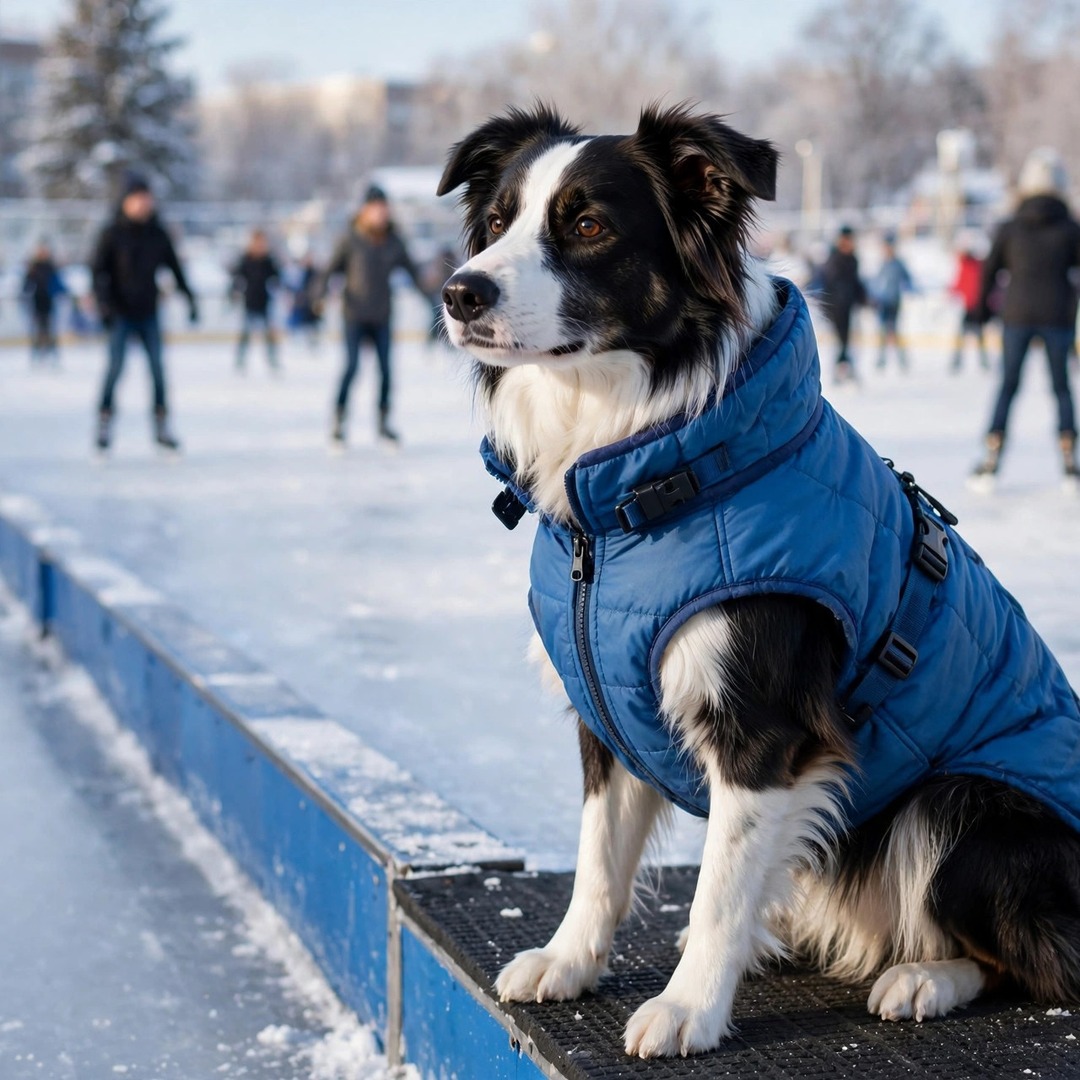
An outdoor ice skating rink in winter is a magical place — music playing, skaters gliding past, lights sparkling on the ice. But for many dogs, the experience is strange and stressful. The ice is cold and slippery under their paws, the skaters move fast and unpredictably, the blades scrape and hiss, the crowds are noisy, and there is nowhere to hide. A dog that panics at the edge of a rink is a danger to itself and to everyone skating. The good news is that most dogs can learn to sit calmly and watch, and the method is simpler than you think: slow, patient practice, a familiar settle spot, and rewards for calm behaviour.
This guide walks you through the whole process, from the first introduction to a calm afternoon watching the skaters together.
Why This Matters
A calm dog at an ice skating rink is a safe dog. A dog that lunges, barks, or scrambles towards the ice can slip and injure itself, get a paw caught at the edge of the rink, startle a skater into a fall, or bolt into a crowd. A frightened dog that runs onto the ice itself is in serious danger — dogs cannot grip ice, and a panicking dog on skates’ territory can hurt itself and others. A calm dog also makes the trip better for you: no pulling towards the barrier, no pacing while you watch, and no accidents from stress. The good news is that most dogs can learn to settle at the rink, as long as you introduce it slowly and never rush the steps. Start on quiet days, build up gradually, and only stay longer when your dog is already relaxed.
Before You Start: Safety First
Before any training, sort out safety and the rules. Check whether dogs are allowed at the rink you use — many rinks do not allow dogs at all, and some only allow them in the viewing area, never on the ice. Your dog should stay in a safe, secure spot: on a mat beside you at the barrier, or on a bench area away from the ice — never on the ice itself, and never running loose near the rink, where they can be hit by a skater or slip and fall. Every dog at a rink should wear a well-fitted harness and a short lead — never a long retractable lead, which can tangle around the barrier, other people, or a skater’s legs. Your dog should be comfortable wearing a harness and sitting still on command before you ever approach a rink. Pack a small bag with treats, a chew, and a familiar blanket or mat so their watching spot smells like home. Never leave your dog alone at a rink, and never tie them to a barrier where they could be trapped if they panic. Keep your dog low, secure, and well away from the ice edge at all times. Pick quiet times for the first visits — a still morning on a quiet weekday, not a busy weekend evening — and keep the first visits very short. In cold weather, remember that your dog can get cold too: short visits, a warm coat for thin-coated dogs, and a check of the paws after every visit, since ice, salt, and grit can irritate them.
Step 1: Get Comfortable Near the Rink
Do not start by going right up to the barrier. Spend a visit or two just being near the rink, at a comfortable distance. Let your dog watch the skaters from afar, hear the music and the scrape of the blades, and get used to the size and noise of the place — a rink is big, bright, and full of fast-moving people, and the sound alone can be overwhelming. Scatter a few treats on the ground so the area becomes a place where good things happen. Practise the basics nearby: sit, stay, and lie down on a small mat in the spot where your dog will watch. Keep these visits short — ten or fifteen minutes — and always end on a positive note with a treat and praise. Repeat this for several days until your dog stands near the rink happily and settles on their mat without hesitation. If your dog barks at the skaters or freezes, you are too close — move back until they can watch calmly, then reward.
Step 2: Practise Settling at the Barrier
When your dog is comfortable at a distance, move closer to the barrier in small steps, over several visits. Walk your dog to the viewing area, put the mat down, ask for a settle, and reward. Then step straight back out. Repeat this a few times so the rink edge itself becomes boring and familiar rather than frightening. If your dog hesitates at the barrier, do not drag them. Lure them with a treat, let them sniff the edge, and reward any step forward. Patience here saves you a struggle later. While you practise, let your dog get used to the sounds — the scrape of blades, the music, the crowd — rewarding calm behaviour, so the noise becomes ordinary.
Step 3: A Very Short Stay
When your dog settles calmly at the barrier, stay for the shortest visit available — even ten or fifteen minutes of watching. Before the skaters pick up speed, put the mat down, ask your dog to settle, and sit beside them. Keep the leash short and loose and your own body relaxed; your dog reads your tension instantly. During the visit, reward calm behaviour quietly: a small treat every few seconds at first, then less often as your dog relaxes. Talk to your dog in a low, steady voice. The movement, the noise, and the fast skaters gliding past are the hardest parts for most dogs, so let your dog get used to them in short bursts before you stay anywhere at all. Watch for signs of stress: panting, drooling, whining, pacing, trembling, or lifting paws can all mean anxiety or cold. If your dog seems distressed, move away from the barrier, let them rest on solid ground, and try again another day. Build up gradually: one short visit, then a longer one, always ending before your dog gets stressed.
Step 4: Teach a Settle Spot
Every rink dog needs a settle spot — a small mat at the barrier beside you, in a safe, low position where they know they should sit and relax, away from the ice edge and the crowd. Train this at home first: put the mat on the floor, lure your dog onto it with a treat, and reward them for sitting down. Add a cue word like “settle” or “place” and practise until your dog goes to the mat on command. Then take the mat to the rink and practise there while it is quiet, and then while it is busier. At the rink, send your dog to their mat whenever the skaters are moving fast or the crowd is thick. A dog who has a job — sitting on their mat — is far calmer than a dog with nothing to do and a whole rink to pace. Bring a chew for the mat so your dog has something pleasant to focus on during longer visits, and keep the mat low and close to your body, where the noise and movement are least overwhelming.
Step 5: Handle the Distractions
Ice rinks are full of distractions: the scrape of blades, the music, the lights, the skaters’ speed, other visitors, other dogs, and the strange sight of people gliding past. Practise calm responses near the rink first. When your dog notices something exciting, reward them for looking at it and then looking back at you — this is the “look at that” game, and it teaches your dog that exciting things are a cue to check in with you, not a cue to chase. At the rink, keep your dog on a short lead until you are sure they will stay calm, and never let them lean over the barrier, jump up, or go near the ice. If your dog barks at a new sound, calmly redirect them to their mat and reward the settle. Do not shout or punish — a frightened dog only gets more anxious, and punishment at a busy rink is stressful for everyone. Before you leave, make sure your dog is settled and low.
Common Problems and Fixes
If your dog refuses to go near the rink, go back a step: more visits at a distance, more treats, and a quieter time of day. If your dog barks at the skaters, practise watching them from far away and rewarding calm, and only move closer when your dog is relaxed. If your dog paces constantly, they may need a shorter visit, a better settle spot, or a calming chew to focus on. If your dog is sick on the way home, talk to your vet about motion sickness — many dogs outgrow it with gradual exposure, and medication can help in the meantime. If your dog is frightened by the music or the blade sounds, practise with similar sounds at home first, at a low volume, rewarding calm. If your dog tries to jump onto the ice, keep them secured in their harness and teach a strong “leave it” and “stay” at home before your next visit. If your dog lifts their paws or shivers, they are cold — go inside, warm them up, and keep the next visit shorter, with a coat. And if your dog is terrified despite slow introductions, do not force it — some dogs simply do not enjoy rinks, and it is kinder to leave them at home than to drag them through something they fear.
Making Rink Visits Fun
Once your dog is calm at the rink, make the visits enjoyable. After watching, take your dog for a walk in the snow so they can stretch their legs and go to the toilet. Bring fresh water and offer it after the visit. Watch for cold: shivering, lifting paws, heavy panting, or lethargy mean your dog needs warmth and water right away. Keep visits short at first and build up slowly, and always end with something your dog loves — a walk in the snow, a play session, or a favourite treat at home. And remember to check your dog’s paws after a visit — ice, salt, and grit on the paths can irritate them — and to keep the lead short and the mat handy for the next trip.
Learning how to teach your dog to stay calm on an ice skating rink takes patience, but the method is simple: introduce the rink slowly, add one short visit at a time, build up visit length gradually, give your dog a settle spot, and reward calm behaviour at every step. Most dogs learn within a few short visits, and the reward is a loyal companion who can settle quietly even beside a sparkling rink in the middle of a winter afternoon.
Has your dog watched an ice skating rink with you? Share your tips — or your funny first-visit story — in the comments below.
This article is for general information only and is not veterinary advice. If you are worried about your dog’s health, please consult a veterinarian.