
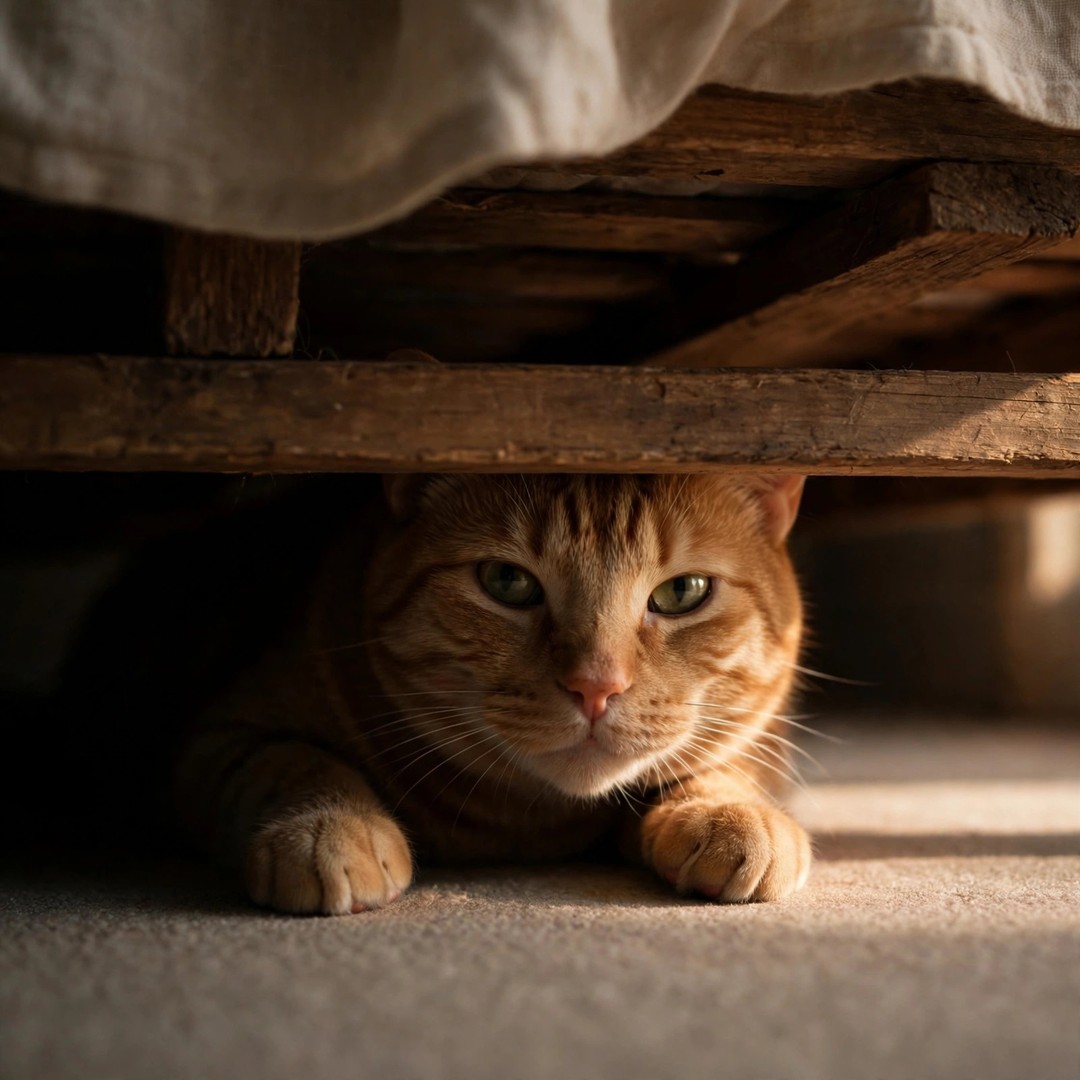
You come home and your cat is gone. No sign of her on the sofa, on the windowsill, or in her usual sunny spot. Then you hear a faint rustle from the bedroom — and there she is, pressed flat under the bed, eyes wide, refusing to come out. It is worrying the first time it happens, and it is one of the most common things cat owners ask about.
The good news is that hiding under the bed is usually normal cat behaviour. Cats are small animals with a strong instinct to find a safe, enclosed space when something feels wrong. The trick is knowing when it is just a cat being a cat — and when it is a sign she needs help.
Why this matters
Hiding is a cat’s way of coping. Unlike a dog, who will usually come to you when he is scared, a cat’s first instinct is to disappear into a small, dark, quiet space where nothing can reach her. Under the bed is perfect: it is low, it is dark, it smells of you, and it has only one way in.
Paying attention to the pattern matters. A cat who hides under the bed during a thunderstorm and comes out an hour later is different from a cat who has been under the bed for three days and will not eat. The first is a habit. The second deserves a closer look. Knowing the difference helps you comfort her when she needs it — and act quickly when something is wrong.
Common causes of hiding under the bed
Something loud or new
This is the most common reason. A thunderstorm, fireworks, a vacuum cleaner, building work next door, a smoke alarm — any sudden loud noise can send a cat straight under the bed. New sounds are the same: a new washing machine, a delivery at the door, a neighbour’s dog barking. Cats hear far better than we do, and what sounds ordinary to you can sound alarming to her.
A change at home
Cats are creatures of habit, and they notice everything. A new piece of furniture, a rearranged room, a new person in the house, a new pet, a new baby, or even a change in your working hours can leave a cat unsettled. Under the bed is where she goes while she works out whether the world is still safe. Most cats adjust within a few days, once the new thing becomes part of the routine.
Visitors
Many cats vanish the moment the doorbell rings. Strangers — their voices, their smells, their shoes — are a lot for a cat to take in. Hiding under the bed while visitors are around is completely normal, especially for a shy cat. She is not being rude. She is managing her own stress in the way cats do best.
Fear or a bad experience
A cat that has had a fright — a fall, a scare from another animal, a trip to the vet — may hide for hours or even a day afterwards. A cat that was chased or cornered by a dog, or that had a bad experience with a child, may start hiding under the bed whenever she hears the thing that scared her. Fear fades with time and patience, but it does not fade if the scary thing keeps happening.
Not feeling well
This is the cause to take seriously. A cat that is in pain or feeling ill often hides — it is an instinct to find a safe place to recover, away from predators. If your cat is hiding under the bed and also eating less, drinking more or less than usual, using the litter box differently, or seems lethargic, that combination needs a vet visit. Cats hide discomfort well, and hiding can be the only visible sign that something is wrong.
She just likes it there
Not every hiding cat is scared. Some cats simply love the space under the bed: it is cool in summer, warm in winter, dark, quiet, and smells of their favourite person. A cat that naps under the bed every afternoon, comes out for food and play, and is otherwise her normal self is probably just enjoying her favourite spot.
What you should do
- Leave her alone. This is the hardest part, and the most important. Do not drag her out from under the bed, do not reach in and grab her, and do not lift the bed to get at her. A frightened cat that is cornered can bite or scratch, and being forced out makes her trust the hiding spot even more — and trust you less.
- Make the room calm. Close the door if you can, turn off loud music or the television, and let the house go quiet. A calm house is a safe house for a hiding cat.
- Put food, water, and a litter box nearby. Not right under the bed — a little way off, where she can reach them without crossing the whole house. A cat that is hiding for a long time still needs to eat and drink.
- Talk to her softly. Sit on the floor near the bed and speak in a calm, ordinary voice. You do not need to coax her out — just let her know you are there and everything is fine. Many cats come out on their own within an hour or two.
- Leave a worn item of clothing nearby. Something that smells of you can be comforting — it tells her that her safe person is close.
What not to do
Never punish a cat for hiding. Shouting, spraying water, or blocking off the space under the bed only adds stress, and a stressed cat hides more. Never block her hiding spot while she is using it — she will find another one, and it will be harder to reach. And never assume she is being stubborn or naughty. Hiding is communication, not defiance.
Helping a shy cat feel safer long term
If your cat hides under the bed often, a few small changes can help her feel braver:
- Give her other hiding spots. A covered cat bed, a box with a hole cut in it, or a shelf high up on the wall all give her safe places to retreat to — and a cat with options is a calmer cat.
- Keep routines steady. Feed and play at roughly the same times each day. Predictability is deeply reassuring to a cat.
- Introduce new things slowly. A new person, a new pet, or a new piece of furniture should appear gradually, with the cat free to approach or retreat as she chooses.
- Play with her every day. A short play session with a wand toy builds confidence and burns off nervous energy. A confident cat hides less.
When to call the vet
Book a vet visit if the hiding is new and sudden, lasts more than a day or two, or comes with other changes — eating less or not at all, drinking a lot, weight loss, litter box changes, vomiting, or your cat seeming lethargic or in pain. A cat that hides and will not come out for food or water needs to be seen promptly. Trust your instincts: you know your cat’s normal better than anyone, and a sudden change in behaviour is always worth checking.
The bottom line
A cat hiding under the bed is usually a cat doing exactly what cats are supposed to do: finding a small, dark, safe place while the world feels uncertain. Most of the time she will come out on her own once things are calm again. Your job is simple: leave her be, keep the house quiet, and watch for the signs that tell you it is more than just a hiding day.
Does your cat have a favourite hiding spot — under the bed, in a cupboard, or somewhere completely unexpected? Tell us in the comments; other cat owners will recognise the hiding game instantly.
This article is for general information only and is not veterinary advice. If you are worried about your cat’s behaviour or health, please consult a veterinarian.