
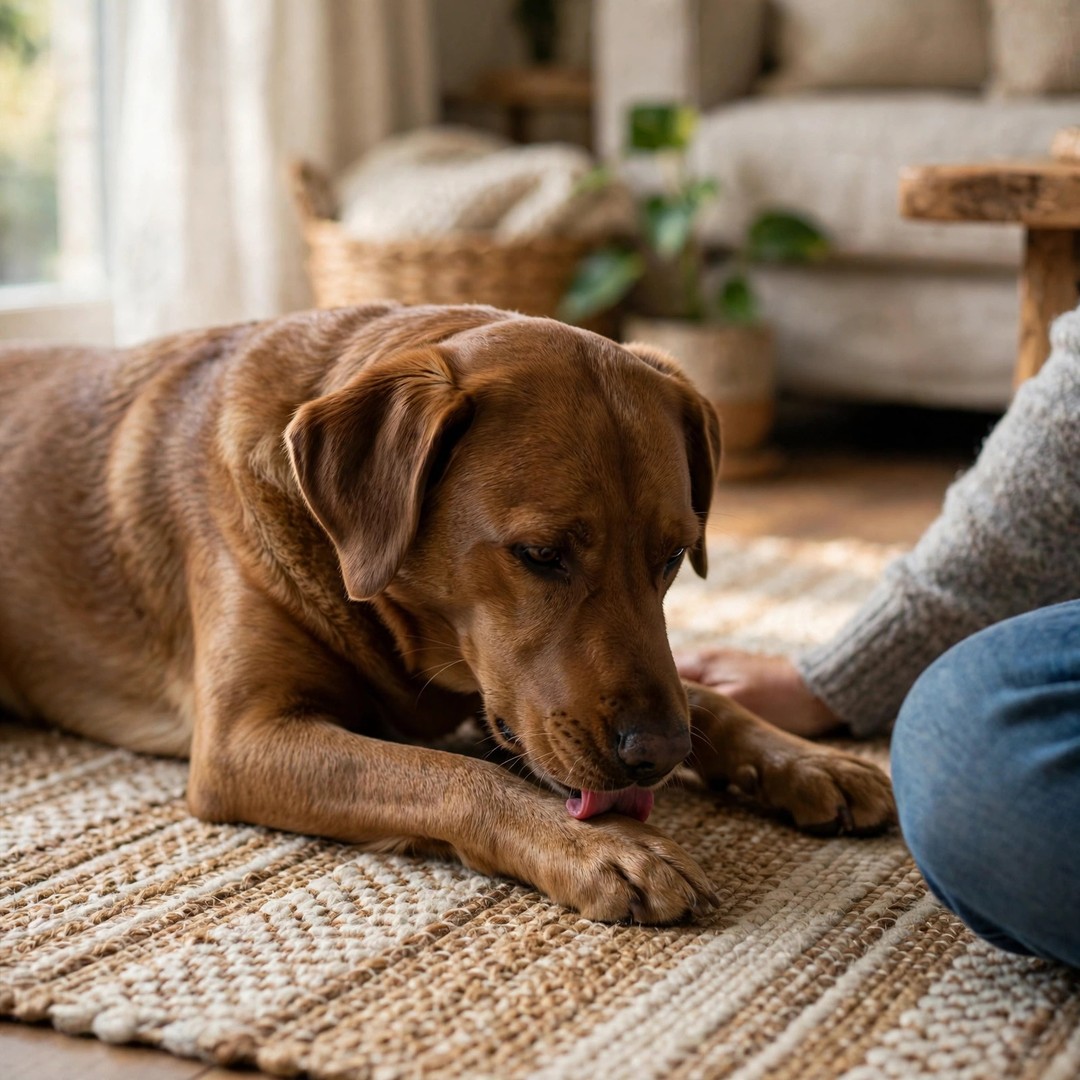
You notice it first at night: the rhythmic licking sound, over and over, same paw, same spot. Or maybe your dog’s paws are turning pink, or the fur between the toes is stained brown. Paw licking is one of the most common things dog owners notice — and one of the most confusing, because it has so many possible causes. Here is how to work out what is going on, and what to do about it.
Why this matters
A little paw licking is normal — dogs groom themselves, and a quick lick after a muddy walk is just cleaning up. But constant, focused licking is different. It can mean itching, pain, irritation, or anxiety, and left unchecked it can damage the skin, cause infections, and make your dog miserable. The sooner you spot the pattern, the sooner you can help.
What is normal, and what is not
Normal grooming is brief, occasional, and spread across the paws — a quick clean after a walk, or a few licks while settling down for a nap. The paws look healthy: clean skin, no redness, no swelling, no smell.
Paw licking worth paying attention to looks different:
- Your dog licks one paw, or one spot, over and over, for minutes at a time.
- The skin between the toes is pink, red, or swollen.
- The fur on the paws is stained brown or pink from saliva.
- Your dog is licking so much that it interrupts sleep, play, or eating.
- There is a smell, discharge, or your dog winces when you touch the paw.
If you are seeing these signs, something is going on — and it is worth investigating.
The most common causes
Allergies. This is the most common cause of chronic paw licking. Environmental allergies — pollen, grass, dust mites — are the usual suspects. The paws are the parts of the body that touch the ground, so they pick up allergens on every walk. Dogs with allergies often lick their paws the most after being outside, or during certain seasons. Food sensitivities can also cause paw licking, though less often.
Irritation or injury. A thorn, a small cut, a grass seed stuck between the toes, a cracked pad, or irritation from road salt and ice in winter can all cause focused licking of one paw. Always check the paw first — spread the toes, look between them, and check the pads. You might find the cause in thirty seconds.
Infection. Constant licking keeps the skin damp, and damp skin is a perfect place for yeast and bacteria to grow — which causes more itching, which causes more licking. It is a cycle. Signs of infection include a yeasty or musty smell, redness between the toes, swelling, or discharge.
Pain. Dogs lick painful areas, just as people rub a sore spot. Arthritis in the toes or wrist, a sprain, or a sore nail can all cause licking of one particular paw. If your dog is limping, favoring a paw, or licking one paw much more than the others, pain is a real possibility.
Boredom or anxiety. Some dogs lick their paws out of habit — a self-soothing behavior, a bit like a person biting their nails. This is more likely if the licking happens when your dog is bored, left alone, or stressed, and the paws look healthy with no redness or swelling.
What you can do at home
Check the paws. Start here, every time. Look between the toes, check the pads for cuts or cracks, and look for anything stuck — grass seeds, small stones, burrs. A quick check after walks, especially in summer and winter, catches many problems early.
Wipe the paws after walks. A damp cloth removes pollen, dust, and road salt before your dog can lick it off. This one habit helps many dogs with allergy-related licking noticeably. In winter, it also removes de-icing salt, which irritates the pads.
Keep the paws clean and dry. After baths or wet walks, dry the paws well, especially between the toes. Moisture trapped between the toes encourages yeast growth.
Provide more enrichment. If boredom or anxiety is the cause, more walks, play sessions, puzzle toys, and training can help a lot. A tired, mentally stimulated dog licks less.
Keep a simple diary. Note when the licking is worse — after walks, in certain seasons, at night, when left alone. Patterns like these are gold for your veterinarian.
What not to do
Do not put creams, sprays, or ointments meant for people on your dog’s paws without veterinary advice — many are toxic if licked, and your dog will lick them. Do not bandage the paw yourself without knowing the cause — a bandage can trap moisture and make things worse. And do not give your dog human allergy medicine unless your veterinarian specifically tells you to.
When to see the vet
Make an appointment if the licking lasts more than a few days, if the skin is red, swollen, smelly, or broken, if your dog is limping or in pain, or if the licking is keeping your dog — or you — awake at night. Your veterinarian will examine the paws, check for infection, and help work out whether the cause is allergies, injury, pain, or something else. There are good, modern treatments available now, and many dogs improve quickly once the cause is found.
Your dog cannot tell you why they are licking — but the pattern can. Which paw, when it happens, and what the skin looks like are all clues. Notice them, write them down, and bring them to the vet.
Has your dog ever gone through a paw-licking phase? What turned out to be the cause? Share your experience in the comments.
This article is for general information only and is not veterinary advice. If you have concerns about your dog’s health, please consult a veterinarian.